How Advanced Weather Modeling Tools Recalibrate Point Spreads in Baseball Betting Across Minor League Venues
Casey Werner · Sep 16, 2026
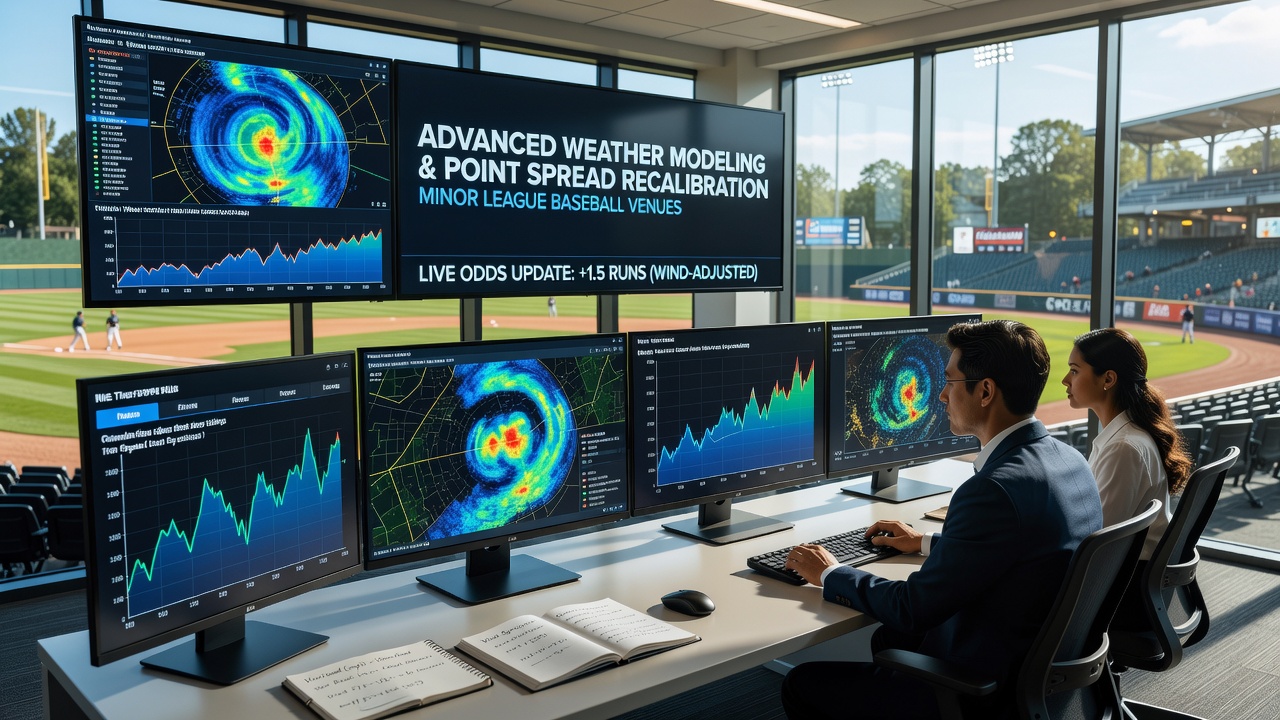
How Advanced Weather Modeling Tools Recalibrate Point Spreads in Baseball Betting Across Minor League Venues
Advanced weather modeling systems integrate high-resolution atmospheric data with historical performance records to adjust point spreads in minor league baseball betting markets; these tools process variables such as wind speed, humidity levels, temperature gradients, and precipitation probabilities at individual venues. Operators and oddsmakers feed the outputs into algorithms that shift run-line probabilities before first pitch, and the adjustments occur most frequently at parks with unique microclimates like those in the high-desert Southwest or coastal Southeast.
Weather Variables That Influence Run-Line Calculations
Wind direction and velocity alter fly-ball distances by measurable margins according to studies from the National Oceanic and Atmospheric Administration, while elevated humidity reduces air density and shortens batted-ball carry in certain ballparks. Temperature swings between day and night games further modify these dynamics, prompting modelers to recalculate expected run totals and reprice the spread accordingly. Data from September 2026 shows several Double-A and Triple-A venues experienced rapid barometric pressure drops that correlated with higher scoring outputs, and betting platforms incorporated those readings within minutes of updated forecasts.
Integration of Modeling Platforms Into Betting Workflows
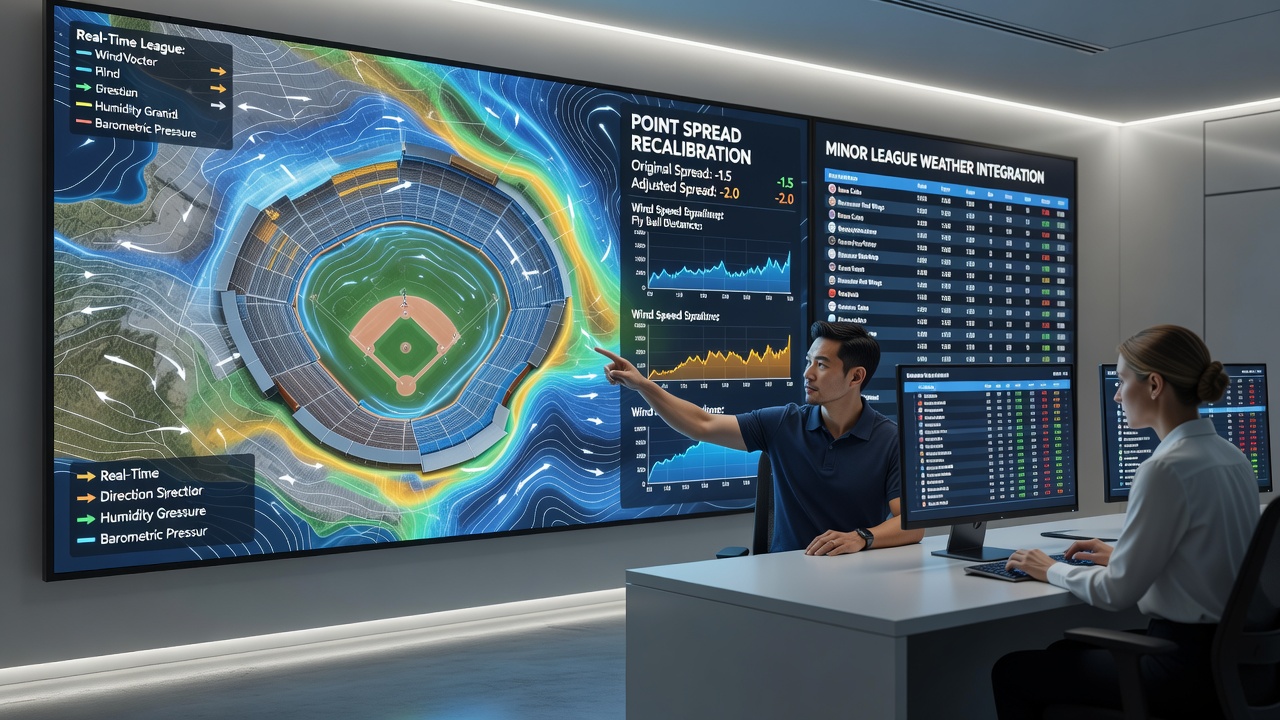
Specialized software suites combine ensemble forecasts from global circulation models with venue-specific sensors that track on-field conditions in real time. Analysts at sportsbooks run these datasets through regression models trained on years of minor league box scores, then output revised probabilities for home-team run margins. The process allows spreads to move from the traditional -1.5 or +1.5 benchmarks when weather projections deviate from seasonal averages, and minor league markets see these shifts more often than major league ones because of smaller sample sizes and greater venue variability.
Venue-Specific Adjustments in Minor League Settings
Ballparks such as those in the Pacific Coast League sit at varying elevations that amplify or dampen weather effects, and modeling tools apply elevation-corrected drag coefficients to each location. Coastal facilities contend with marine layers that increase moisture content late in the evening, while inland venues face gust fronts that arrive with little warning. Operators track these patterns across the full schedule, and the resulting recalibrations appear in betting lines hours before gates open. One documented case from the 2026 season involved a High-A park where sustained crosswinds reduced expected home-run rates by 18 percent, prompting the spread to tighten by half a run in the final pregame update.
Data Sources and Model Validation Practices
Researchers at institutions including the University of Oklahoma's Center for Analysis and Prediction of Storms supply open-source mesoscale models that betting analysts adapt for sports applications. Validation occurs through back-testing against archived radar and surface observations, and accuracy metrics improve each season as additional sensor networks come online. Minor league organizations have begun sharing localized wind and temperature readings with third-party forecasters, which in turn refines the inputs used for spread recalibration. These collaborative efforts produce tighter confidence intervals around projected run totals, and the downstream effect appears in narrower betting margins during periods of unstable weather.
Real-Time Recalibration During Games
Once a contest begins, updated radar loops and on-site anemometer readings trigger further line movements in live markets. In-game models compare actual conditions against the pregame forecast and issue revised probabilities every half-inning when discrepancies exceed set thresholds. Bettors observe these adjustments most clearly in games affected by approaching thunderstorms or sudden wind shifts, and the speed of the response depends on the latency of the data pipeline feeding each sportsbook. Minor league contests, with shorter average durations than major league games, allow fewer opportunities for midgame recalibration yet still register measurable shifts when weather changes rapidly.
Conclusion
Advanced weather modeling tools now form a standard component of point-spread management across minor league baseball betting platforms. By combining ensemble forecasts, venue sensors, and performance databases, these systems produce dynamic adjustments that reflect current atmospheric conditions at each ballpark. Continued expansion of observational networks and refinement of mesoscale models will likely increase the frequency and precision of such recalibrations in upcoming seasons.